
An annual leave handover should let a colleague keep active client work moving without reconstructing every decision from your inbox. A list of projects is not enough. The person covering needs to know what happens next, which version matters, when a response is due and where their authority ends.
This annual leave handover template is for temporary internal cover in a freelance collaboration or small creative studio. It is not a final delivery pack, a resignation handover or guidance about leave entitlements. It records the working arrangement for the absence and a checkpoint for handing the current record back when the original owner returns.
Download the internal leave handover note and fictional example (TXT) and the active work cover tracker (CSV). Replace the examples, agree the arrangement with the people involved and check the references before relying on them. Neither file changes task assignments, account access or client communications automatically.
Define the cover period and the work that needs it
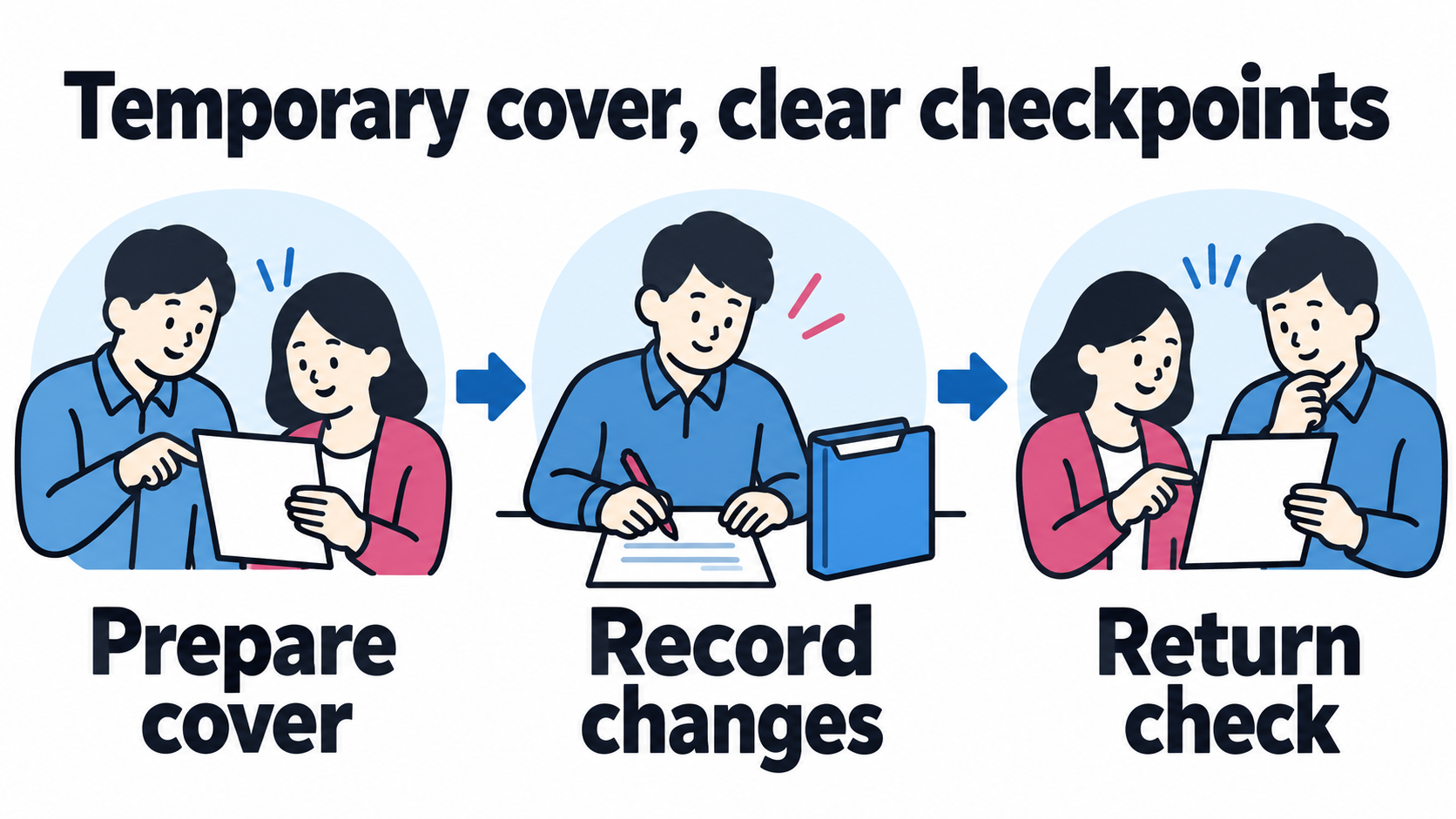
Write the absence dates, the person coordinating cover and the point when the arrangement will be reviewed after return. Do not assume that every project needs the same treatment. An active proof awaiting a response needs a different note from a project that has no agreed action during the absence.
List the commitments that could need attention while the owner is away. For each, identify the next action, due date, current position and the source record. Include a task that needs no action only if another person might otherwise act on it. “Waiting for the agreed review date; do not send an earlier proof” can be useful when a colleague would otherwise mistake silence for an omission.
Keep the scope temporary. The original person is not necessarily transferring a whole client relationship, approving a permanent responsibility change or giving every colleague the same access. The cover note should say which commitments are covered and how the team will decide what happens when the original owner returns.
Give each live item a next action, not a history essay
Start each entry with what the covering person should do next. Then supply the context needed to do it correctly. A short current note with a versioned reference is easier to use than a long account in which the important deadline appears halfway down the page.
| Field | Useful content | Avoid leaving only |
|---|---|---|
| Current position | Proof B is awaiting the named approver’s response | Project in progress |
| Next action and due date | Check the agreed response on the recorded date | Keep an eye on it |
| Working reference | The approved folder and exact version under review | The latest file somewhere in chat |
| Decision boundary | Who can approve a changed output or commitment | Use your judgement |
| Cover and backup | The agreed coordinating person and fallback route | Someone from the team |
Keep the evidence in its agreed location rather than duplicating every file into the note. Record the relevant brief, proof and decision references, with enough description to identify them. A link that opens an entire client archive is less useful than a clear reference to the work under review. The note should also say where new observations and decisions will be recorded during cover.
If a due time matters, include its timezone. If the date is not agreed, say what must be confirmed and by whom. Do not convert an uncertain date into a firm commitment simply to complete the spreadsheet. The cover owner can follow up on that missing decision without pretending it is settled.
Check access and decision authority separately
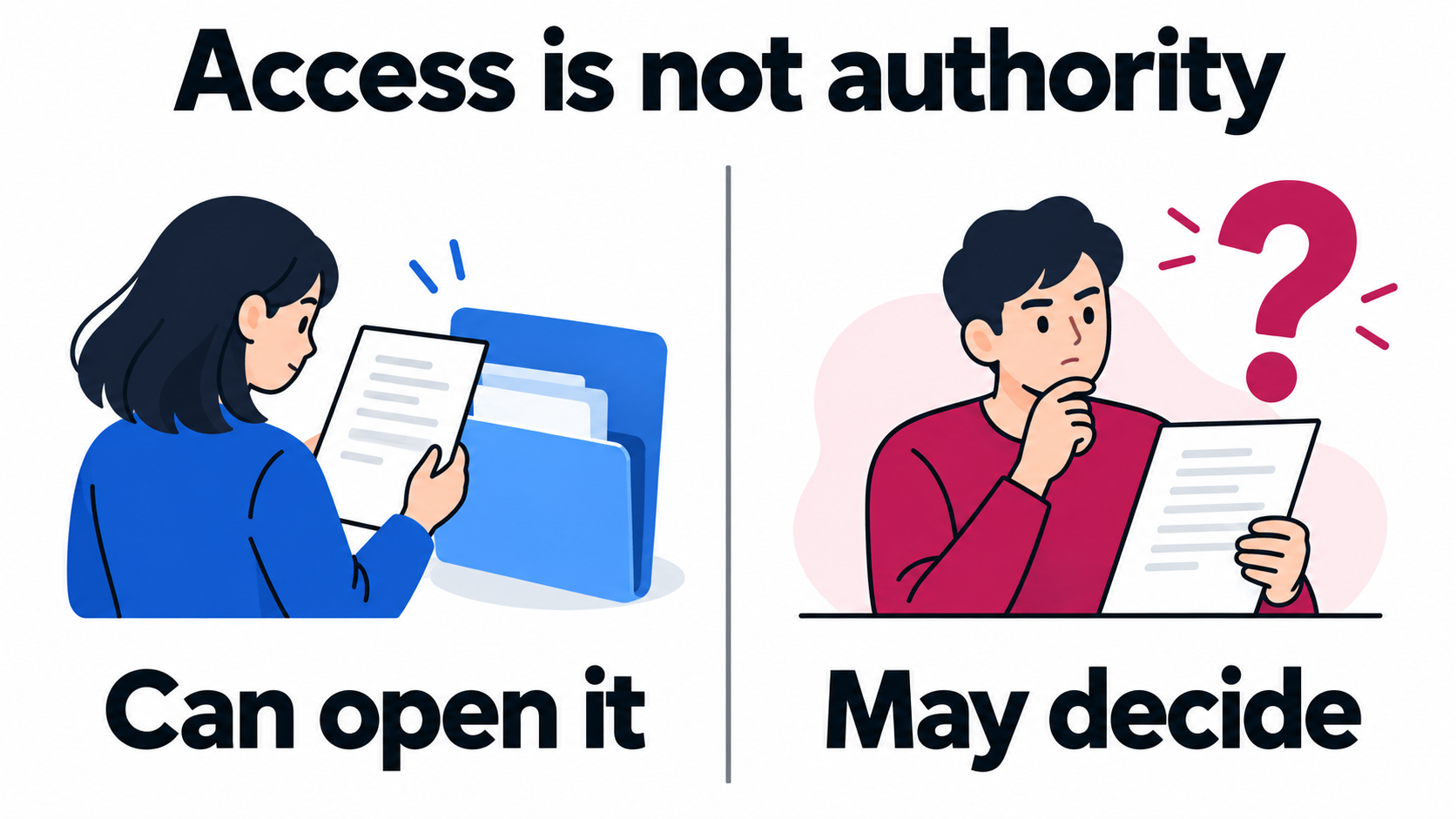
Being able to open a folder does not mean a colleague may approve its contents or share them with a client. Being named as the covering person does not grant access to an account. Record the approved working locations and the permissions needed for the specific tasks, then check them through your normal authorised process before the absence.
Use each person’s own approved account or role. Do not put passwords, recovery codes or another person’s login in the handover note. If access is missing, record the gap and arrange it through the person authorised to manage it. A colleague should not discover on the day of a deadline that the only plan was to use the absent person’s account.
Separate routine actions from decisions that need approval. The covering person might be able to record a response, prepare an internal revision or check that a proof matches the brief. They may still need another person to agree a new delivery date, a different output or a public release. Name the role that can make that decision and the route for reaching them.
The Australian Government’s risk planning guidance includes assigning responsibilities and timeframes and scheduling future checks. Those general planning points inform this template. They do not establish a leave policy, grant access or give a covering person authority to make client commitments.
Agree a backup for decisions the cover owner cannot make
Name a backup and check that they have agreed to the role. A name copied from an old note is not a dependable fallback if that person is also unavailable. State which situations should go to them, what information they need and what the covering person should do while waiting.
Use ordinary project triggers: the approver is unavailable, the requested change falls outside the agreed work, or the deadline cannot be met with the inputs available. The backup may help obtain a decision; that does not mean they can authorise every change. If nobody available has the necessary authority, record the waiting state and use the agreed decision route instead of improvising an approval.
Do not make the absent person the automatic answer to every question. Agree any contact arrangement before the absence, including whether there is one at all. The internal note should give colleagues a usable working route rather than assuming someone on leave will monitor messages or rescue an incomplete handover.
Walk through a real next step before the absence
Ask the cover owner to locate the current proof, identify the next due action and explain the decision boundary back to you. They should be able to find the approved working record with their own access and know where to record what happens. A useful rehearsal exposes a missing reference while there is still time to fix it.
Test the arrangement with material the participant is authorised to see. The rehearsal need not send a client message, change a live file or publish anything. It can stop at finding the reference and describing the intended action. Record what was checked and which access or authority question remains open.
Keep a draft handover visibly incomplete until its necessary checks are resolved. If a colleague can find the file but the decision approver is unknown, the arrangement has not become ready merely because the document looks tidy. Give that unresolved item an owner and a date before the cover period begins.
A fictional motion studio prepares temporary cover
The completed note below is an invented illustration. Northline Motion, its client Fieldstone Festival, Rae, Owen, Mika, Noor and all references and dates are fictional. It is not a customer record or evidence of real access being granted. The example is a completed draft note with one readiness check deliberately left open.
Cover boundary: Fieldstone Festival teaser, reference FF-TEASER. Rae will be away from 3 to 6 November 2026. Owen coordinates the listed active work; Mika is the agreed backup. Return checkpoint: Rae and Owen on 9 November.
Current position: Teaser proof B is awaiting Noor’s consolidated client response. The agreed response date is 4 November. The note points to proof B and the approved brief in the team’s agreed project folder.
Next action: Owen checks the response on 4 November, records its source reference and identifies any unresolved instruction. No earlier proof or public release is part of this cover task.
Authority: Owen may update the internal task record and prepare work already described by the approved brief. A changed output, changed delivery commitment or public release needs the existing approval route through Mika and the named client approver; Owen does not grant that approval himself.
Access and readiness: Owen must confirm his own approved access to the named folder and current task record before 3 November. That check is still pending in this draft. Rae and Owen will resolve it at the 2 November rehearsal; no password or shared login is supplied.
Backup route: If the response is unclear or the approver is unavailable, Owen records the question and asks Mika through the agreed internal route. The affected decision stays waiting until an authorised answer is recorded.
During cover: Owen records the date, decision, proof reference and next owner for each change in the existing project record, so Rae does not return to a second, conflicting task list.
Return check: On 9 November, Rae and Owen compare the current record with this note, identify work still waiting and agree the next owner and date. The draft is not ready for reliance until the pending access check has been completed and recorded.
The example covers one live commitment instead of pretending that every project changes hands. Its return date is a checkpoint, not an instruction to move all work back automatically. Its pending access check is visible because a filled template is not the same thing as a ready working arrangement.
Keep one current record during cover
Agree where the cover owner records new information. A separate private list can leave the rest of the team looking at an old deadline or approval. Keep the handover note as context and use the agreed project record for current actions, with references to the decision that changed them.
If a client needs an update, the person authorised to communicate should use the existing agreed route and approved information. This guide does not send that update or assume that temporary internal cover changes the client’s communication arrangement. The client status report template can help structure an agreed update, while the meeting notes template can preserve a decision and its owner.
Use the return checkpoint to hand back the current position
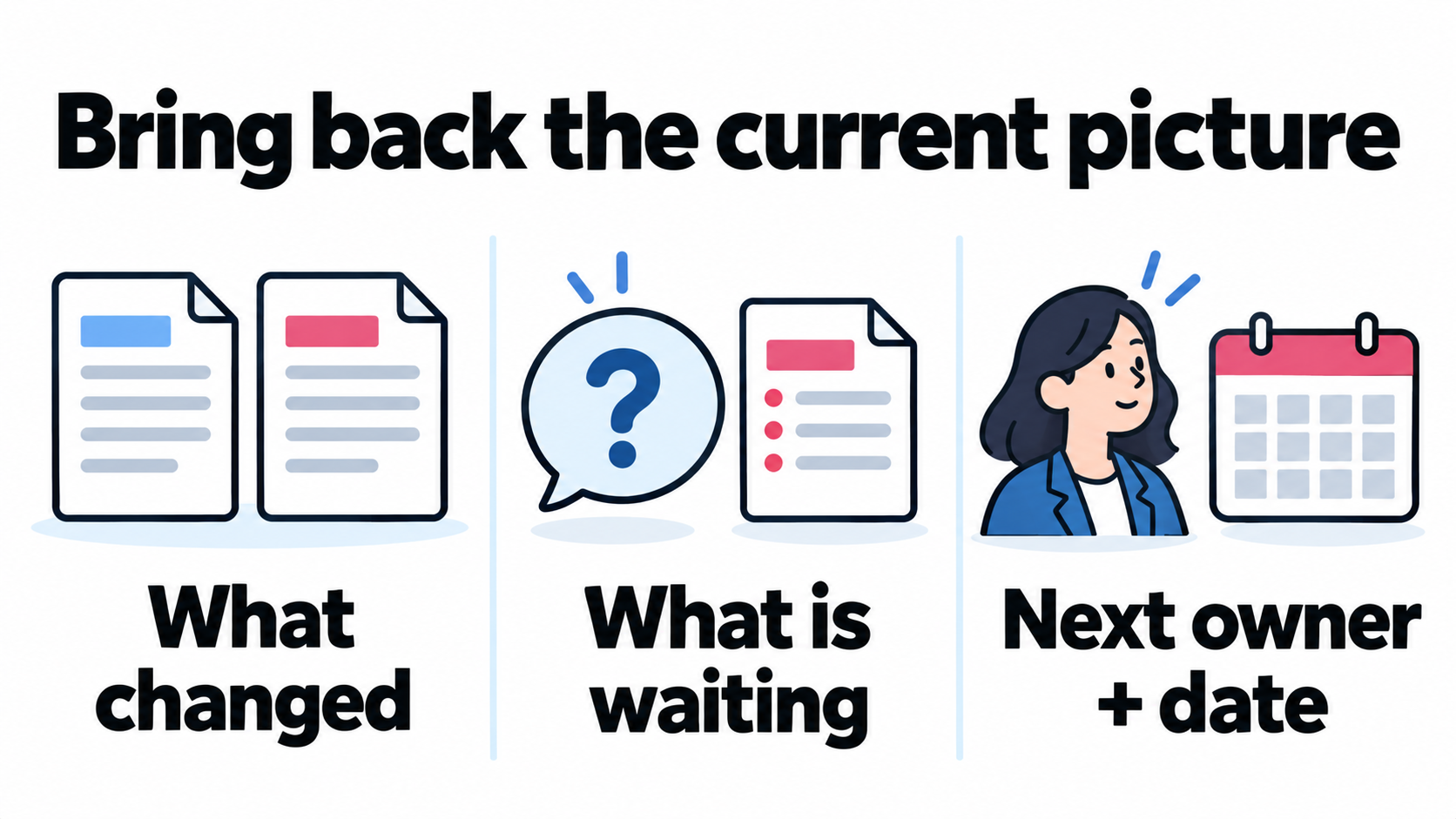
At return, compare the note with what actually happened. Record decisions made, work completed, work waiting and the next commitments. Check that a proof reference still identifies the version everyone means. Do not judge the cover only by whether something went wrong; a quiet period can still contain an unresolved decision that needs attention.
Agree who owns each remaining task before changing the working record. Some work may stay with the colleague who is already doing it; other work may return to the original owner. That is a team decision, not an automatic consequence of the absence ending. Preserve useful context for the next handover without copying old dates into a new plan.
You can record the preparation check, active cover action and return checkpoint as tasks against the client project in TASKUL, each with a named responsible person and date. Keep the approved note and its references in the team’s agreed document location. This is manual coordination, not automatic delegation, account provisioning, monitoring or an English email-reminder promise. A dependable handover leaves the next person able to find the work and understand what they may do with it.